
Posted on 20 Oct 2026
Feeling confident and supported to manage COPD at home: Teresa’s story
Living alone with chronic obstructive pulmonary disease (COPD), Teresa sometimes found it difficult to access the right support when her symptoms worsened.
On one occasion, when she could not see her GP, Teresa contacted the Virtual Emergency Department and was advised to call an ambulance. She was subsequently admitted to hospital for her COPD.
Posted on 20 Oct 2026
Teletrials in action: expanding access to research and care
Access to clinical trials and innovative models of care should not depend on where a person lives.
Two new videos from the Australian Teletrial Program highlight how teletrials are supporting both clinical research and innovative models of care.


Posted on 13 Oct 2026
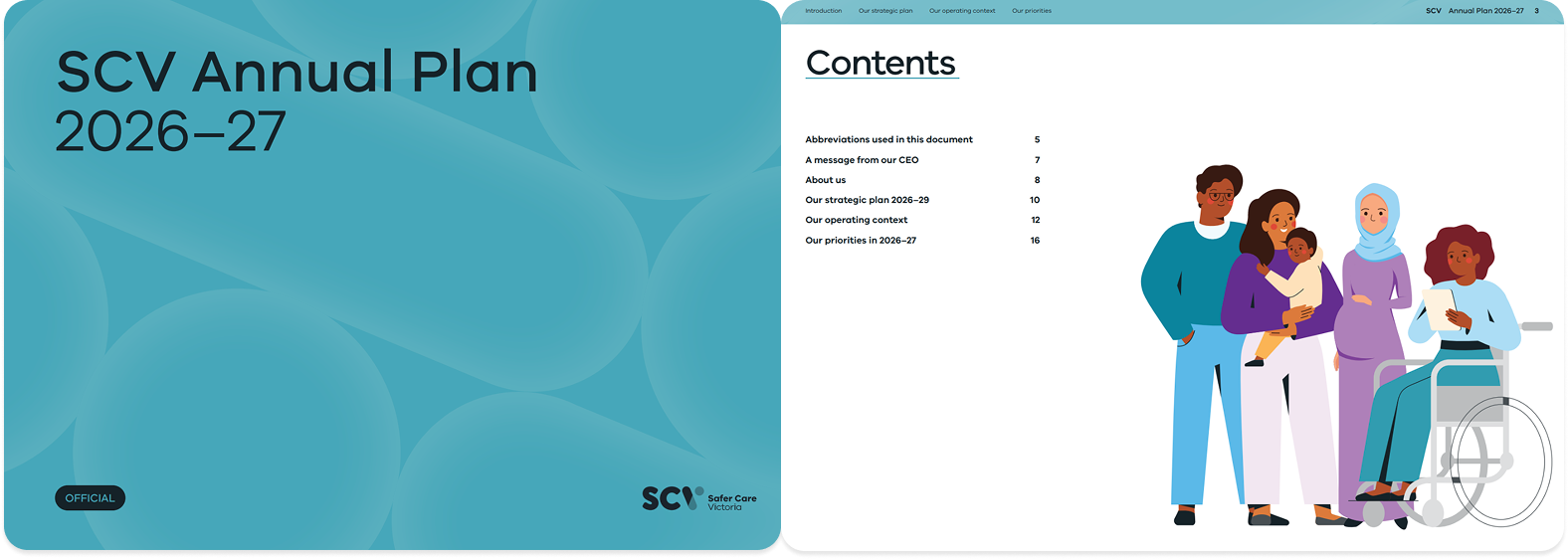
We’re excited to share our Annual plan 2026-27
Our Annual plan 2026–27 details what we will deliver in the next year to achieve our vision of a better, safer healthcare system for all Victorians.
Partnering with consumers in health research
Consumers in health research
In a health context, a consumer is anyone who uses, or may use, health services or participate in health research. This includes patients, potential participants, carers, families and community members.
Consumers bring lived experience that helps ensure health research and clinical trials are relevant, accessible and responsive to community needs.
Working in collaborative partnership with consumers supports more inclusive research that is better designed, communicated and delivered.
Stakeholder toolkit - My Maternity Journey
My Maternity Journey provides clear, trusted information about pregnancy, birth and early postnatal care. It helps women and families understand what to expect, explore their maternity care options and make informed choices about their care.
Posted on 27 Oct 2026
Statutory Duty of Candour annual data closure – 30 November 2026
From 30 November 2026, Statutory Duty of Candour data for 2025–26 and previous financial years will be closed for routine updates in the Agency Information Management System (AIMS).
What health services need to do
Health services are asked to review their Statutory Duty of Candour data and ensure all required reporting and updates are complete by 30 November 2026, including:
